
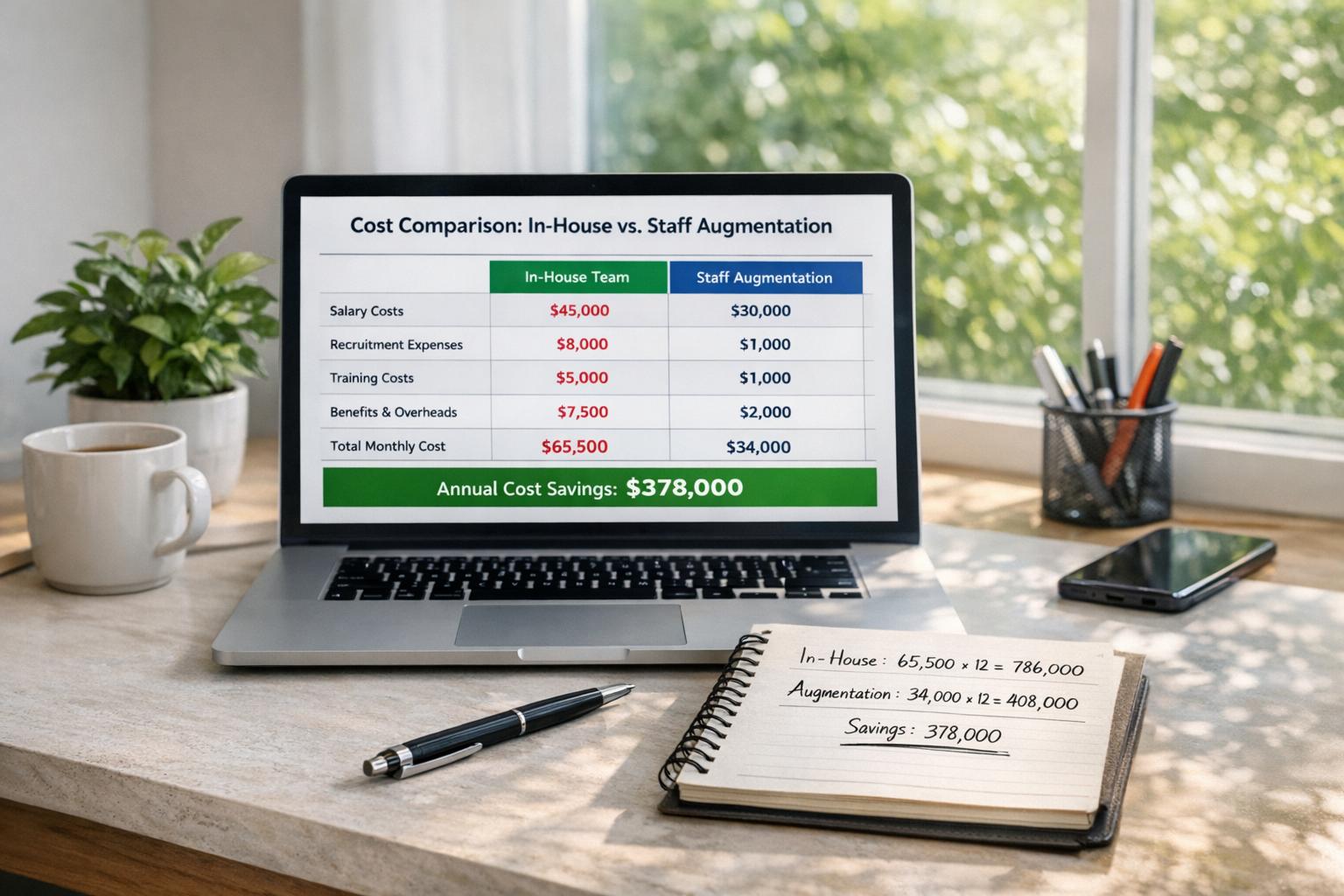
Unlock Savings with Staff Augmentation
In today’s fast-paced business world, finding cost-effective ways to build your team is more important than ever. Many companies are turning to flexible staffing solutions to meet project demands without breaking the bank. A tool like the Staff Augmentation Savings Estimator can be a game-changer, helping you visualize the financial impact of outsourcing versus traditional hiring. By inputting a few key details about your staffing needs, you get a clear picture of how much you could save.
Why Consider Flexible Staffing?
Hiring full-time employees often comes with hidden costs—think benefits, training, and workspace expenses. On the other hand, bringing in talent on a project basis lets you scale up or down as needed, paying only for the expertise you require. Whether you’re exploring nearshore options in Latin America or offshore teams in Asia, comparing these costs to in-house hiring reveals significant opportunities for efficiency. Beyond the numbers, this approach offers agility, letting your business adapt to changing priorities without long-term commitments. If you’re curious about the potential impact on your bottom line, tools that break down these expenses are an invaluable first step toward smarter staffing decisions.
FAQs
How does staff augmentation save money compared to full-time hires?
Great question! Staff augmentation lets you hire skilled professionals for specific durations without the long-term costs of full-time employees. You’re not on the hook for benefits, extensive onboarding, or overhead like office space—those can add up to 30% more for traditional hires. Plus, you pay only for the hours or months you need, so it’s perfect for project-based work or seasonal demands. This tool crunches the numbers based on hourly rates and location to show your exact savings.
What locations are best for staff augmentation?
It really depends on your priorities. Nearshore options, like Latin America, often strike a balance with rates around $25/hour, plus closer time zones and cultural alignment if you’re in the US. Offshore locations in Asia, with rates as low as $15/hour, can maximize savings but might come with bigger time zone challenges. The estimator lets you toggle between these to see what fits your budget and workflow best.
Can I trust the cost data in this tool?
Absolutely. We’ve built this estimator using industry-standard benchmarks for hourly rates—$60/hour for US full-time equivalents, $25 for nearshore, and $15 for offshore. We also factor in a realistic 30% additional cost for benefits and overhead with traditional hires. While actual costs can vary based on specific roles or providers, these figures give you a solid starting point to understand potential savings and make informed decisions.