
- Smile.io: Ideal for small Shopify-based businesses. Offers quick setup, points programs, referrals, and VIP tiers. Pricing starts at $49/month, with a free plan for up to 200 orders/month.
- Yotpo Loyalty & Referrals: Great for mid-market and enterprise brands. Includes 20+ earning campaigns, tiered programs, and real-time loyalty data sync. Plans start at $79/month.
- Annex Cloud: Designed for enterprises needing omnichannel loyalty and advocacy tools. Integrates with Salesforce, SAP, and marketing platforms. Custom pricing.
- Talon.One: Advanced rule-based engine for customizable loyalty programs. API-first, ideal for enterprises with developer resources. Pricing varies.
- Zinrelo: Focuses on multi-dimensional loyalty (transactional, social, behavioral). Offers predictive analytics and no-code integrations. Starts at $7,500/year.
- Antavo: Enterprise-focused with a no-code campaign editor, gamification, and global support. Pricing begins at $10,000/year.
- Open Loyalty: API-first, headless platform for complete customization. Suitable for large enterprises with in-house development teams. Custom pricing.
- Comarch Loyalty Management: Tailored for large enterprises like airlines and retail. Features AI tools, fraud detection, and multi-region support. Custom pricing.
Quick Comparison
| Tool | Best For | Key Features | Starting Price |
|---|---|---|---|
| Smile.io | Small businesses on Shopify | Points, referrals, VIP tiers | $0/month |
| Yotpo | Mid-market & enterprise brands | Tiered programs, real-time sync | $79/month |
| Annex Cloud | Enterprises with complex needs | Omnichannel loyalty, advocacy tools | Custom |
| Talon.One | Enterprises with dev resources | Rule-based engine, API-first | Custom |
| Zinrelo | Data-driven mid-to-large teams | Multi-dimensional loyalty, analytics | $7,500/year |
| Antavo | Global enterprises | No-code editor, gamification | $10,000/year |
| Open Loyalty | Custom tech-heavy enterprises | API-first, headless architecture | Custom |
| Comarch | Large enterprises | AI tools, fraud detection | Custom |
Each tool has its strengths, from Smile.io’s simplicity to Open Loyalty’s flexibility. Choose based on your business size, technical resources, and loyalty program goals.
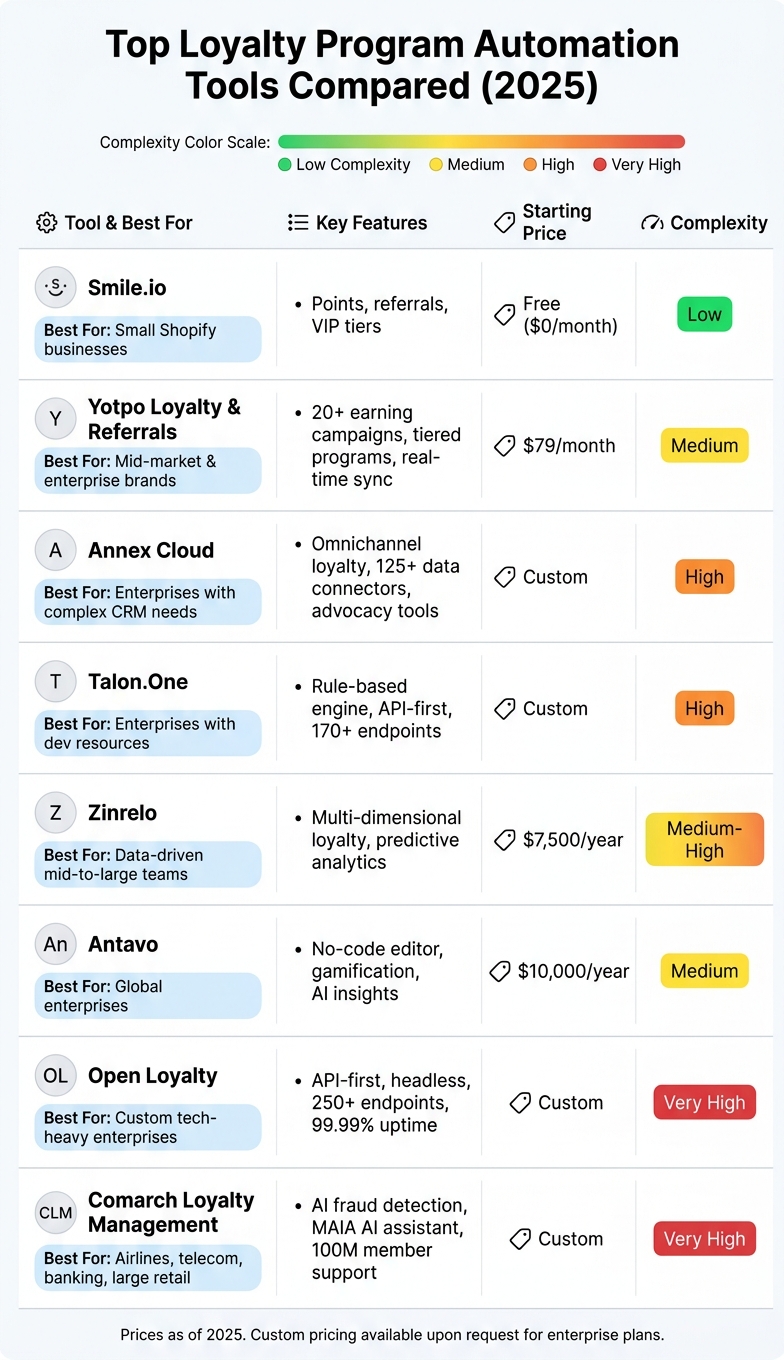
Top Loyalty Program Automation Tools Compared (2025)
Top Loyalty Program Tools Compared: Which is Best? | Salesforce Hulk
sbb-itb-edfb666
1. Smile.io
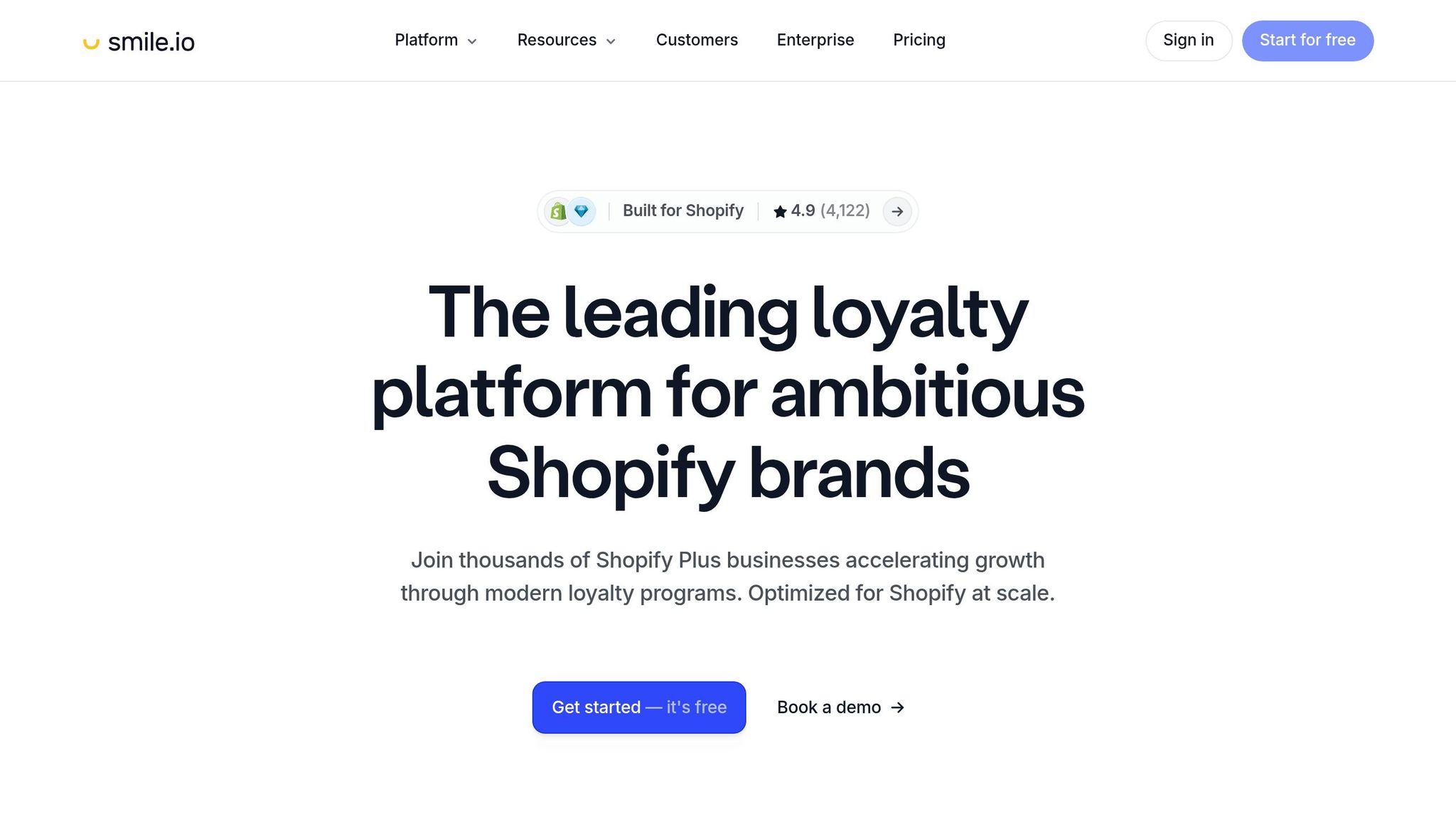
Smile.io is a popular loyalty platform within the Shopify ecosystem, trusted by over 100,000 merchants. Tailored for small and medium-sized e-commerce businesses, it’s designed to get up and running quickly – often in under an hour – using pre-built widgets and templates.
The platform focuses on three core loyalty features: points programs, referrals, and VIP tiers. Its integration with Klaviyo supports 10+ email flows, such as birthday rewards and points notifications, which contribute to 64% of all point redemptions. Smile.io also works seamlessly with Shopify Flow, enabling custom triggers like awarding bonus points for milestone purchases or high-value products.
Customers can easily manage their loyalty activity through the Smile Loyalty Hub, where they can check points, track VIP status, and redeem rewards. Automated enrollment after a customer’s first purchase increases participation rates by 3.4x, and loyalty members on the platform tend to shop twice as often as non-members.
"Smile.io is a very user-friendly, plug-and-play app that we could integrate into the tech infrastructure that we had in place, like Shopify and Klaviyo." – Naturium
Brands like Monos, a luggage company, have seen impressive results, generating $8 million in additional revenue through Smile.io’s loyalty features. The platform boasts a 4.9/5 rating on the Shopify App Store (from over 4,200 reviews) and a 4.6/5 rating on G2 (from 314 reviews). However, some users note that advanced reporting and deeper customization options are only available on higher-tier plans, which may feel restrictive as businesses grow.
| Plan | Price | Key Features |
|---|---|---|
| Free | $0/month | Up to 200 monthly orders; points and referrals |
| Essential | $49/month | Branding and Shopify Flow actions |
| Standard | $199/month | VIP program, advanced reporting |
| Growth | $599/month | Loyalty Hub, unlimited integrations |
| Plus | $999/month | Priority support, API access |
Smile.io offers a streamlined solution for Shopify-first and direct-to-consumer brands looking to automate loyalty programs. While it may not suit businesses needing advanced API-driven customization, it’s a strong option for SMBs seeking quick and effective results. Up next, we’ll dive into Yotpo Loyalty & Referrals to explore its features and capabilities.
2. Yotpo Loyalty & Referrals
Yotpo has carved out a niche in loyalty automation, catering primarily to mid-market and enterprise brands. With over 25,000 loyalty programs under its belt, the platform offers tools designed to create personalized customer engagement experiences. At its core is a loyalty engine that includes 20+ pre-built earning campaigns – like rewards for high-value checkouts, social media interactions, product reviews, and even birthdays – all without requiring any coding. Businesses can also set up tier-based VIP programs, allowing customers to progress through spending or referral-based cohorts, unlocking exclusive perks along the way. The results speak volumes: Yotpo loyalty members boast a 41% higher repeat purchase rate and a 59% increase in customer lifetime value.
The platform syncs loyalty data – such as points balances, VIP tiers, and coupon statuses – in real time with email platforms like Klaviyo and Omnisend. This enables automated communications for events like tier upgrades or point reminders. Yotpo also integrates with over 180 marketing technologies, making it a strong choice for brands with complex tech stacks.
Some impressive case studies back up Yotpo’s effectiveness. Revolution Beauty, for instance, achieved an 8x ROI and a 44% boost in average order value (AOV). Similarly, Trinity Road attributed 11% of its total revenue to enhanced retention strategies powered by Yotpo.
"Loyalty offers a new way to engage our customers. Instead of discounts, we communicate that they’ve already earned $20 off – highlighting rewards and creating a new way to connect with our customer base." – Leanne Chan, Sr. Director, CRM & Loyalty
The platform has a solid reputation, earning a 4.4/5 rating from 632 reviews. Users often highlight its consultative support model as a major plus. However, certain advanced features, such as Webhook URLs and dedicated success management, are only available in the Platinum or Enterprise plans. Additionally, new users might find the interface a bit overwhelming during the onboarding process.
Yotpo offers a free plan for stores handling fewer than 100 orders per month, while paid plans start at $79 per month, scaling up to custom pricing for enterprise-level needs.
Next, let’s dive into how Annex Cloud uses similar integrations to provide even more customization options.
3. Annex Cloud
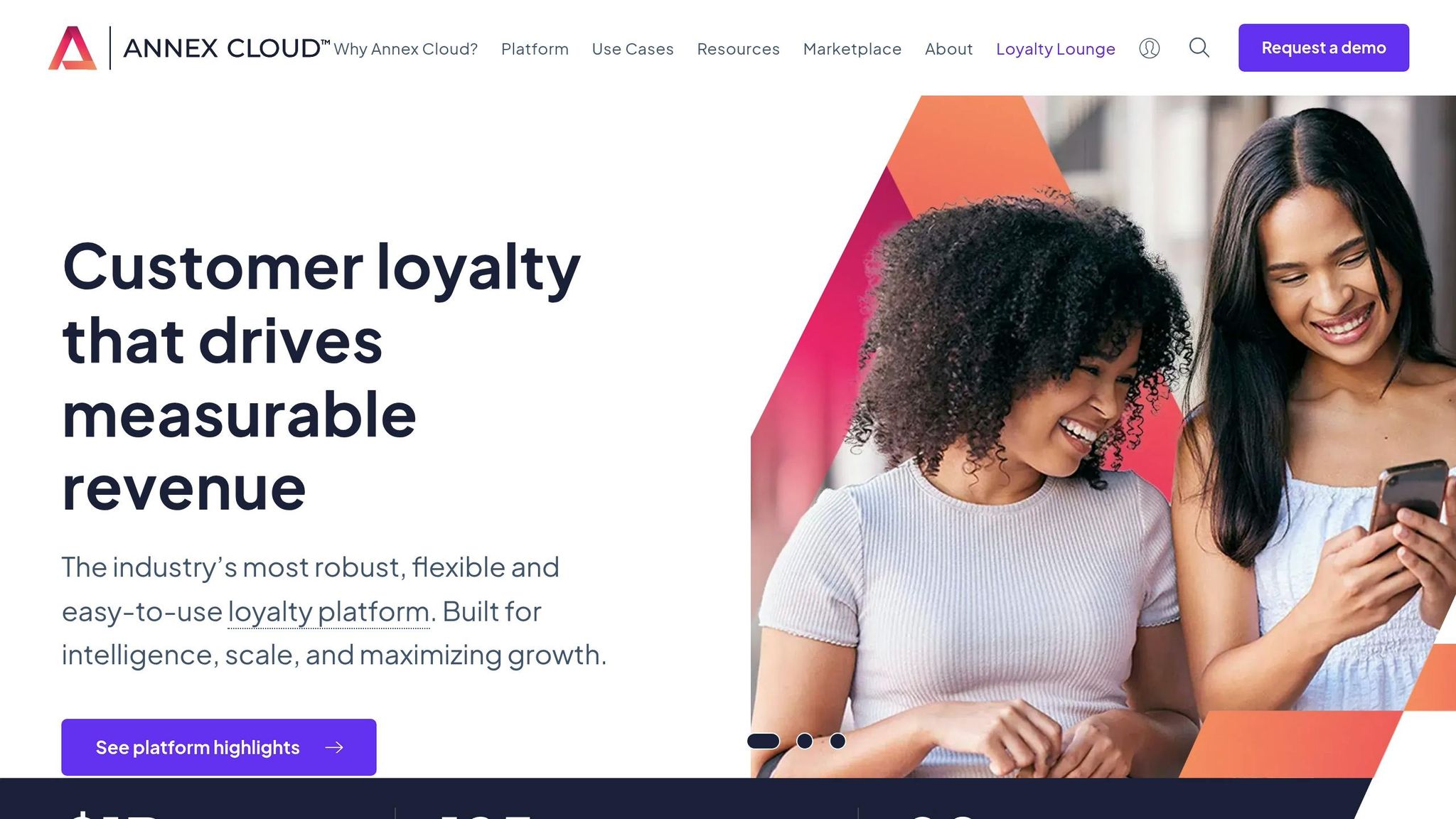
Annex Cloud is built for enterprises that need advanced loyalty features. It combines omnichannel loyalty, referral programs, and user-generated content into one platform – something you don’t often find in smaller solutions. One of its standout features is its "advocacy tools", which encourage customers to become brand ambassadors through incentivized referrals and social proof.
Following in the footsteps of Yotpo’s feature-rich approach, Annex Cloud offers deep integration options tailored for enterprise systems. It boasts over 125 data connectors, including native ones for Salesforce and SAP, making it especially appealing to businesses already using these platforms. With SCPI support, deployment is faster and more efficient. It also integrates seamlessly with marketing automation tools like Braze and Acoustic, enabling personalized email, SMS, and push notifications triggered by real-time loyalty data.
| Integration Category | Key Partners |
|---|---|
| ERP & CRM | SAP, Microsoft Dynamics, Bloomreach |
| E-Commerce | Adobe Commerce (Magento), BigCommerce, commercetools |
| Marketing Automation | Braze, Acoustic, Constant Contact |
| Payments & POS | Adyen (card-linked loyalty) |
| UGC & Social | Bazaarvoice |
Annex Cloud stands out with its variety of loyalty models, offering transactional, behavioral, emotional, paid, and coalition options. This flexibility allows businesses to reward customers for more than just purchases – actions like writing reviews, attending events, or engaging on social media can all earn rewards. For large organizations, this means creating programs that go far beyond simple point systems.
That said, Annex Cloud isn’t the right fit for every business. Pricing is customized for enterprises, and the onboarding process can be lengthy. Some users have also pointed out that parts of the technology feel less modern compared to newer API-first platforms. It’s best suited for medium to large enterprises managing complex, high-volume loyalty programs – especially those already working within Salesforce or SAP ecosystems.
4. Talon.One
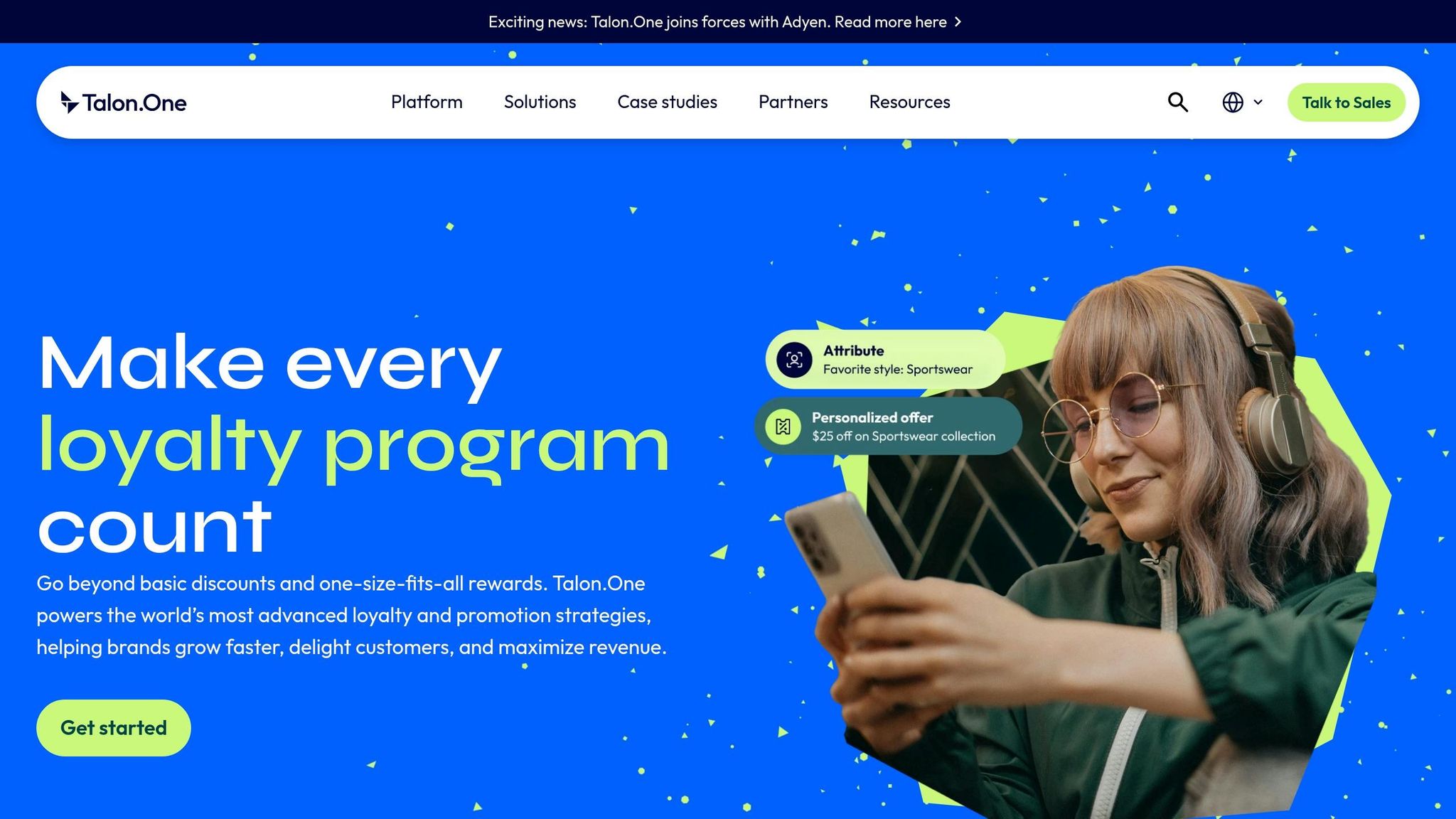
Talon.One stands out with its logic-based Rule Builder, allowing precise control over rewards and their triggers. With this tool, you can define "Conditions" – such as a customer’s location, total session spend, or specific actions – and match them with "Effects", like awarding points, applying discounts, or triggering webhooks. The best part? Marketers can handle this without needing to code, while developers can enhance functionality by adding custom attributes for more complex setups.
One of its standout features is the subledger system, which lets a single customer profile manage multiple loyalty balances tailored to different goals or channels. For instance, a brand could maintain separate balances for in-store purchases and online transactions. Beyond traditional points systems, Talon.One supports tiered loyalty programs, digital wallets, referral codes, and even gamified mechanics like spin-to-win challenges. According to platform data, 56% of loyalty programs incorporate gamified elements to drive engagement.
Talon.One Predict takes things further by using AI to identify customers at risk of churning, enabling businesses to launch automated re-engagement campaigns. The platform also provides separate Sandbox and Live environments, ensuring teams can thoroughly test loyalty rules before rolling them out.
On the integration front, Talon.One operates on an API-first, headless architecture with over 170 API endpoints. It connects seamlessly with platforms like Adobe Experience Platform, Shopify, Braze, Segment, and mParticle. However, this level of integration requires upfront development resources, so it’s not a plug-and-play solution. This robust API framework underscores Talon.One’s focus on scalable and flexible loyalty automation.
"Talon.One has transformed the way we launch and create personalized loyalty and promotions for our guests." – Nicolai Schnack, CTO, Joe and The Juice
Talon.One boasts a 4.6/5 rating on G2 and has been featured in reports like the Gartner 2025 Market Guide for Loyalty Program Vendors, the Forrester Loyalty Platforms Landscape 2025, and the IDC MarketScape Report for Retail Loyalty Software Providers 2024. It’s particularly well-suited for mid-size to large enterprises in industries like e-commerce, fintech, retail, and on-demand services – especially those with technical teams capable of managing an API-driven implementation. These features make Talon.One a strong option for businesses ready to embrace advanced loyalty solutions.
5. Zinrelo
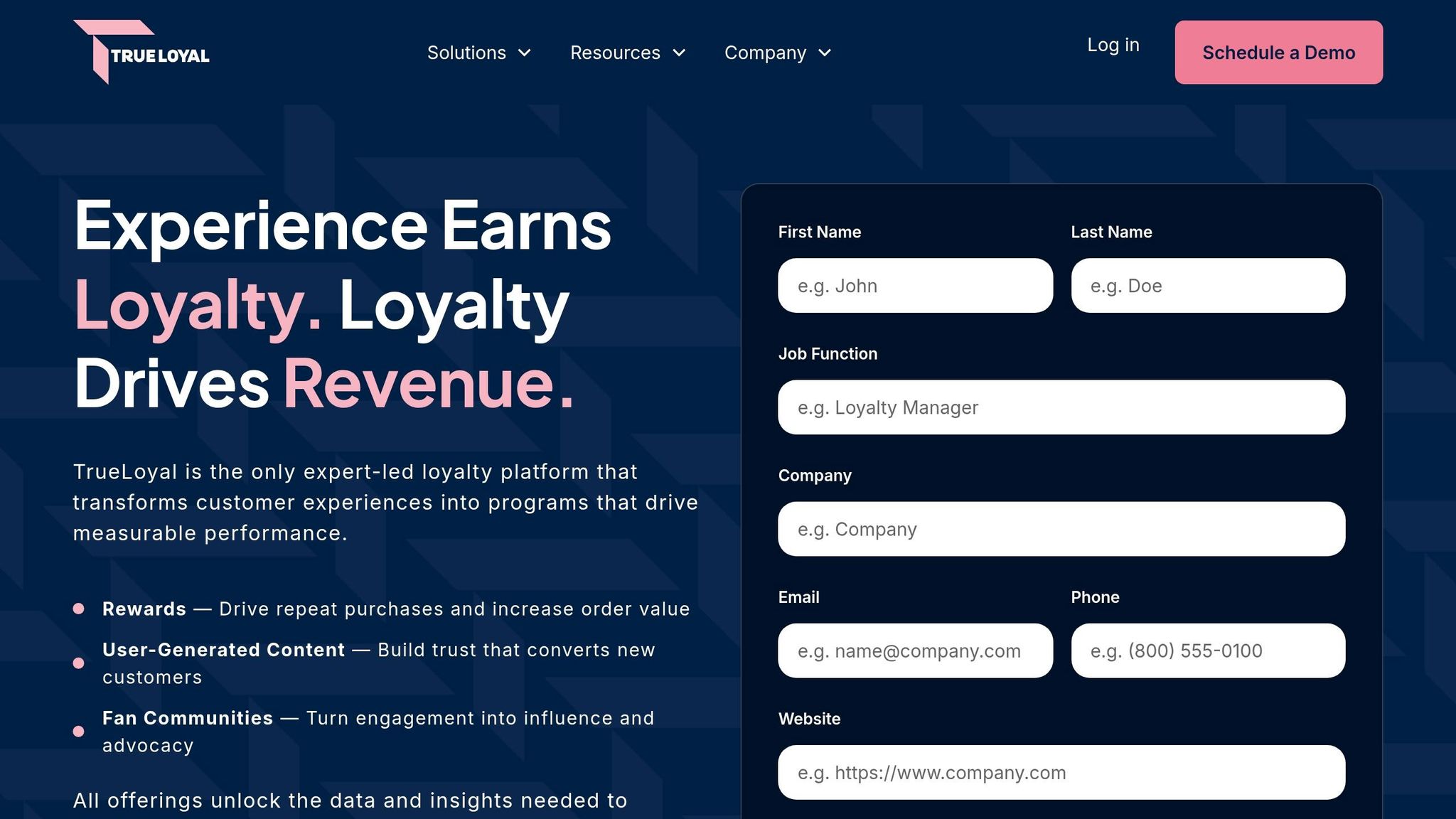
Zinrelo offers a SaaS-based loyalty solution tailored for mid-sized and large businesses that want to create a deeper connection with their customers. Its approach focuses on rewarding loyalty across multiple dimensions: transactional, social, advocacy, engagement, behavioral, and emotional. This layered strategy helps businesses implement more nuanced and effective loyalty programs.
"Zinrelo combines technology with deep data analytics and ongoing strategy consultation to unlock multiple dimensions of loyalty, including transactional, social, advocacy, engagement, behavioral, and emotional." – Zinrelo
The platform boasts over 100 pre-configured reward activities, covering everything from purchases and referrals to product reviews and social media interactions. Its Marketing Promotions Engine automates targeted campaigns, helping businesses influence customer behavior. Automated email notifications are also built in, ensuring customers stay engaged at key loyalty milestones. For teams without access to developers, Zinrelo’s Zapier integration enables no-code automation with over 9,000 apps. Triggers like "Tier Upgrade" or "Points Expired" can launch workflows seamlessly.
Zinrelo goes beyond rewards by offering tools to automate marketing campaigns and integrate with other platforms. Using data science and machine learning, it segments users and monitors changes in buying behavior. This allows businesses to personalize retention strategies and re-engage customers who may be at risk of disengaging. It also integrates with tools like HubSpot for CRM syncing, Dotdigital for email marketing, and Gladly for customer service. For instance, customer support agents can view loyalty tiers, check point balances, and even award or redeem points directly within a customer profile.
The platform supports over 100 currencies and integrates with major e-commerce platforms like Shopify, BigCommerce, Adobe Commerce (Magento), Salesforce Commerce Cloud, and Square. Zinrelo has earned a 4.5/5 rating in industry reviews and was ranked the #1 loyalty rewards management software on G2. However, the setup process can be challenging, and its entry-level Self Service plan starts at $7,500 per year, which may be a hurdle for smaller businesses. Enterprise pricing is available upon request.
6. Antavo
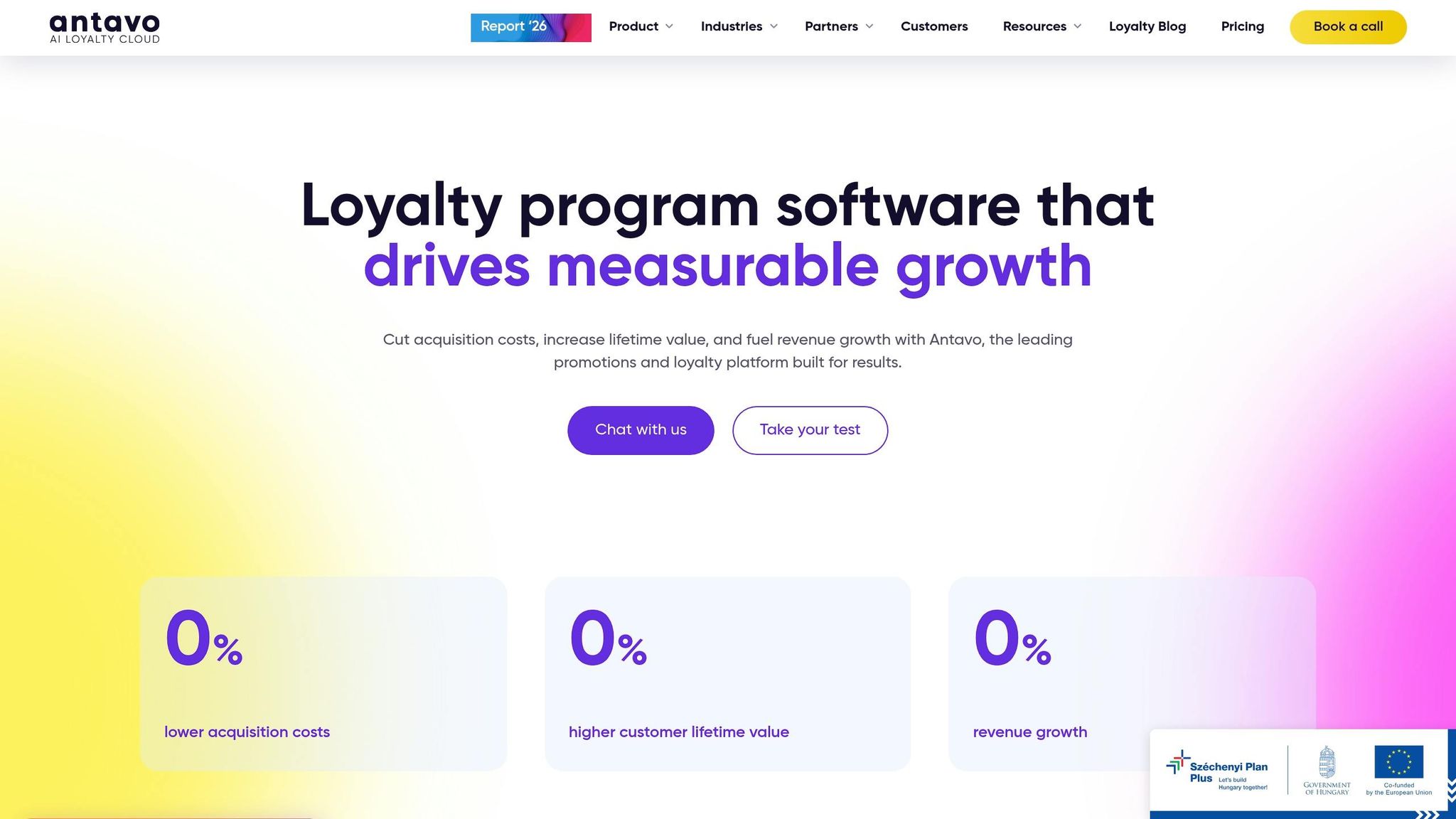
Antavo is a specialized loyalty platform tailored for enterprises that need advanced loyalty management solutions. It’s trusted by global brands like Coca-Cola, Nike, and BMW, and has earned recognition in the Gartner Market Guide for Loyalty Program Vendors 2025 as well as Forrester’s Loyalty Platforms Landscape, Q3 2025.
What sets Antavo apart is its headless, API-first design, which integrates smoothly with existing systems. Its drag-and-drop Workflows editor allows non-technical teams to create reward campaigns without writing a single line of code.
The platform also incorporates Timi AI for predictive insights, along with tools like The Optimizer and The Planner for real-time analytics and journey mapping. These features can speed up loyalty program implementation by as much as 10x. Together, they create a robust automation suite that simplifies complex processes.
Antavo’s impact is clear: users have reported a +43% year-over-year increase in hotel bookings and a +34% rise in member transactions. One brand even transitioned 3 million members into a new 7-tier loyalty structure.
"Antavo’s flexible platform helped us launch a fully connected loyalty program in record time." – André Filomeno, SVP Customer & Digital
This platform is particularly well-suited for mid-to-large enterprises in industries like fashion, beauty, travel, hospitality, and retail – especially those with international operations. It supports multi-currency, multi-language, and multi-region deployments, making it a strong choice for global brands. Pricing starts at $10,000+ per year. Up next, we’ll look at Open Loyalty, another tool that broadens your automation capabilities.
7. Open Loyalty
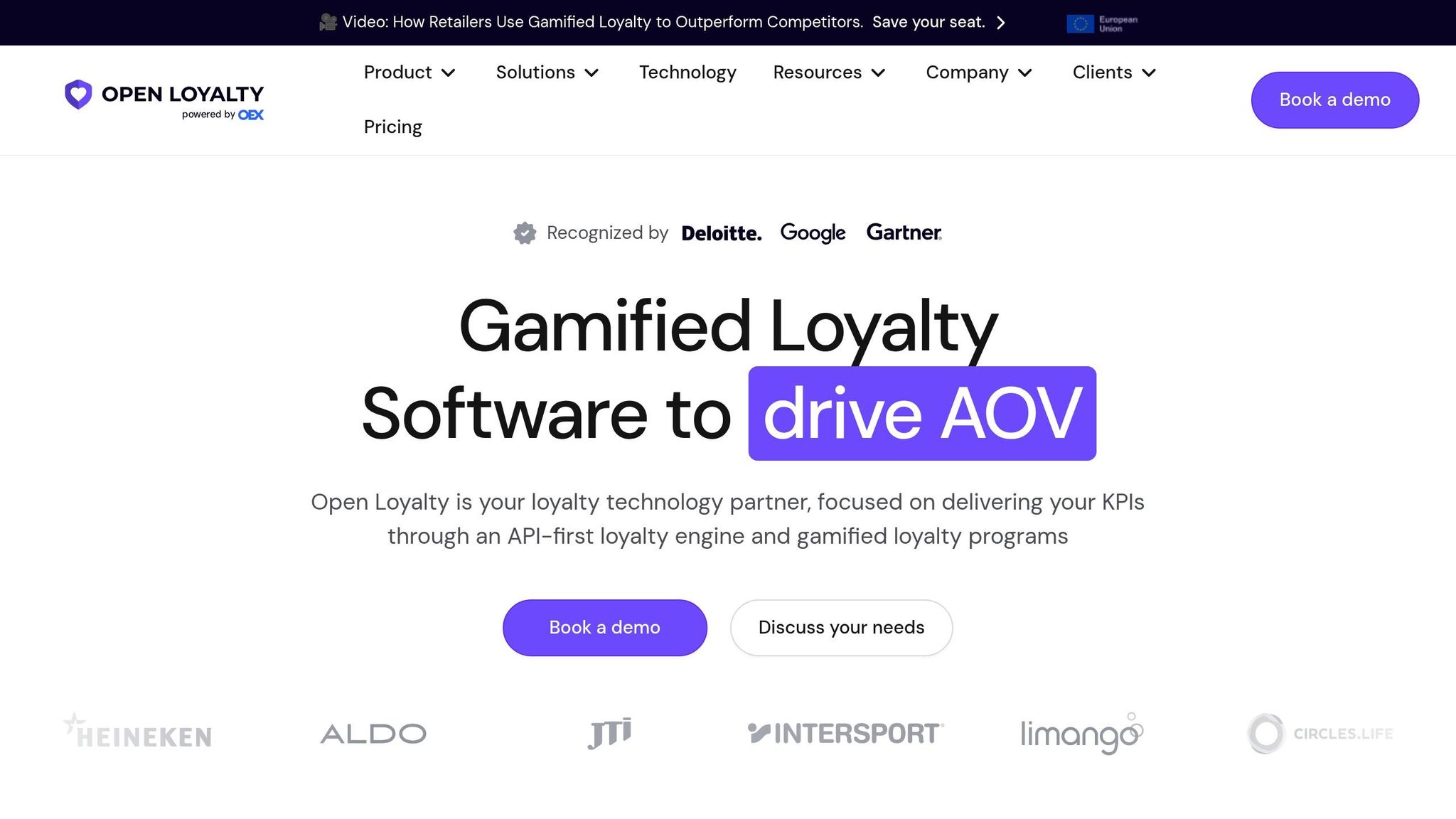
Open Loyalty stands out as a headless, API-first loyalty engine designed for businesses that demand complete control over how loyalty features integrate into their existing tech stack. Unlike pre-built front-end solutions, Open Loyalty offers unparalleled flexibility, connecting seamlessly to almost any system – whether it’s e-commerce platforms, CRM tools, mobile apps, or POS systems – via 250+ REST and GraphQL endpoints. With an average API response time of just 120 milliseconds and a guaranteed 99.99% uptime, it ensures reliable and fast performance.
This platform handles over 1 billion loyalty events monthly and supports more than 350 million earn-and-spend transactions every month. For marketing teams that prefer to make campaign updates without developer assistance, Open Loyalty provides a no-code campaign builder. This tool simplifies the process of automating rewards for occasions like birthdays, membership anniversaries, or recurring events. Beyond traditional points systems, it also incorporates gamification features such as badges, leaderboards, challenges, and interactive games like "spin the wheel".
For example, the ALDO Group successfully rolled out a global omnichannel loyalty program across multiple regions in just three months, achieving an impressive 72% points redemption rate.
"The Open Loyalty customer loyalty program software allows us a lot of flexibility in building these dynamics and delivering a strong experience for our consumers." – Thomas Archer Bata, ALDO Group
Another success story comes from the U.S. Soccer Federation, which leveraged Open Loyalty’s API integration to reach a 91% customer retention rate. Product Manager Nicole Kusi shared: "We loved what the API had to offer as we knew it was going to be a code integration, as well as some of the out-of-the-box features. We are extremely happy with the usability".
Open Loyalty is particularly well-suited for mid-to-large enterprises in industries like retail, fintech, sports, digital health, and financial services – especially those with in-house development teams ready to maximize its API capabilities. Its ISO 27001 and ISO 9001 certifications make it a dependable choice for businesses in regulated sectors. Pricing is tailored to the number of monthly active members, with quotes available upon request. Next, we’ll take a look at Comarch Loyalty Management and its approach to enterprise-level loyalty solutions.
8. Comarch Loyalty Management
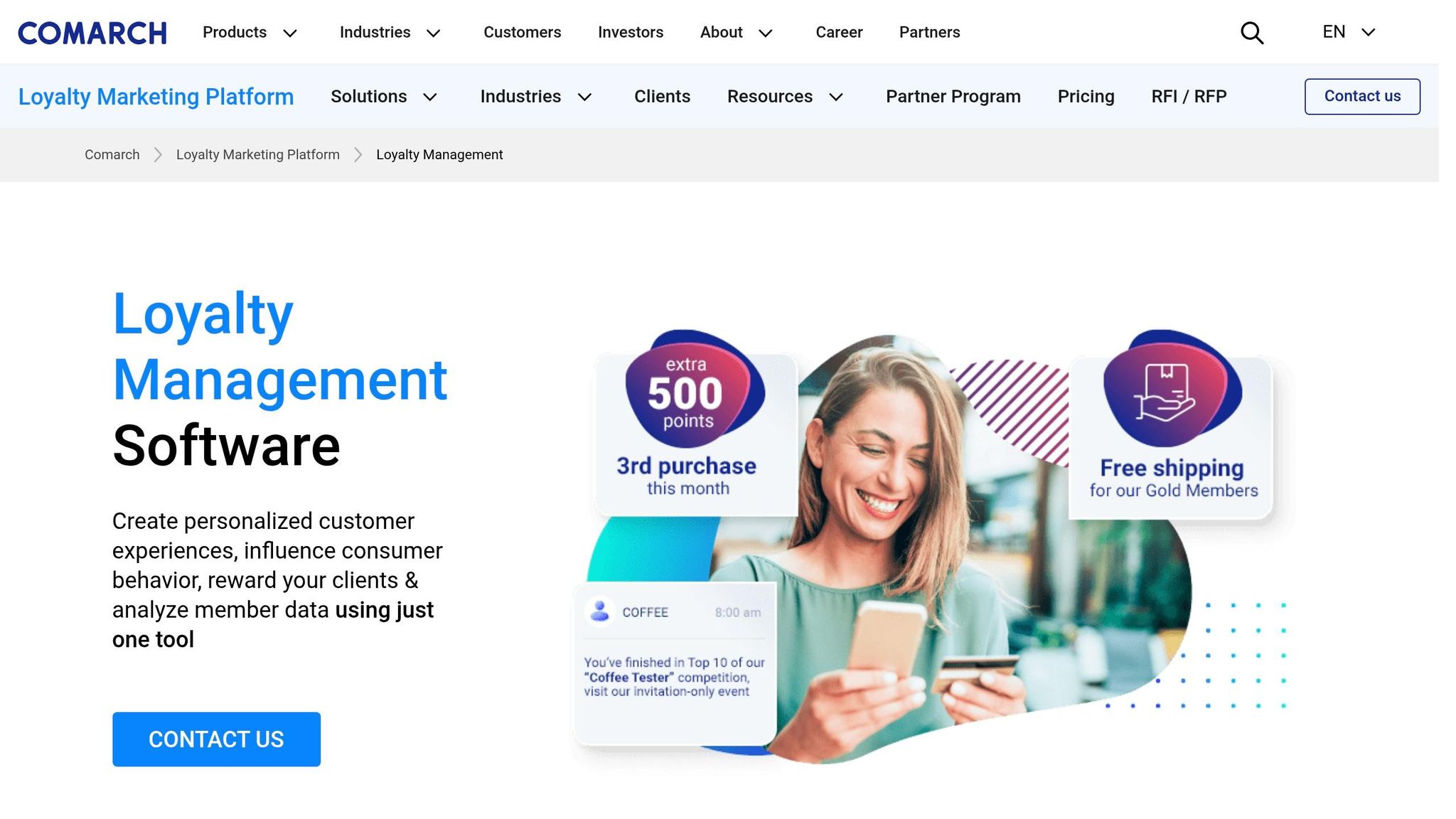
Comarch Loyalty Management caters to large enterprises across industries like retail, travel, banking, and telecommunications. Its client roster includes big names such as BP Global, Heathrow Airport, JetBlue Airways, KFC France, and Galeries Lafayette. This cloud-based platform supports loyalty programs ranging from 1,000 members to a staggering 100 million, with 24/7 global support ensuring uninterrupted service.
At the heart of the platform is its Promotion Engine, which automates rewards like points, discounts, coupons, and giveaways during key customer interactions. Additionally, a built-in AI/ML-powered fraud detection system keeps an eye on behavioral anomalies, flagging suspicious activity before it escalates. The system also collects zero- and first-party data from various sales and marketing channels, enabling the creation of detailed customer profiles and delivering personalized offers in real time.
One standout feature is the MAIA AI Assistant, a tool designed to help marketers navigate the platform with ease. It simplifies workflows, answers questions quickly, and eliminates the need for developer assistance. With features like A/B/n testing and prebuilt templates, campaign deployment and optimization become much faster, even for teams without extensive loyalty program experience. These capabilities highlight Comarch’s focus on serving enterprise-level needs in the loyalty automation space.
In Forrester Research’s Q1 2023 Loyalty Technology Solutions Wave report, Comarch earned recognition as a "Strong Performer." The report praised its advanced member profile management, robust fraud prevention tools, and effective KPI measurement capabilities.
However, the platform’s complexity and high total cost of ownership may not make it the best fit for smaller businesses. Pricing details are customized and provided upon request.
Pros and Cons of Each Tool
Each tool discussed here has its own strengths and weaknesses, making it essential to choose one that aligns with your business size, technical capabilities, and goals. Instead of chasing the highest-rated option, focus on finding the platform that fits your specific needs. Below is a quick comparison of the tools, highlighting their advantages, drawbacks, and ideal use cases.
| Tool | Key Strengths | Key Weaknesses | Best Fit |
|---|---|---|---|
| Smile.io | Quick setup (under an hour), free plan, 4.8/5 on G2 | Limited customization; $0.10/order fee can add up quickly | Small Shopify businesses |
| Yotpo Loyalty & Referrals | Combines reviews, SMS, and loyalty; AI-based segmentation | Lacks native digital wallet; top-tier plans required for strategic support | Mid-market and DTC brands |
| Annex Cloud | Strong omnichannel advocacy; integrates well with Salesforce/SAP | Some outdated tech; onboarding process can be lengthy | Enterprises with existing CRM systems |
| Talon.One | Advanced rule engine; real-time promotions | Steep learning curve; costs rise significantly at scale | Enterprises with engineering teams |
| Zinrelo | Predictive analytics; 4.7/5 on G2 | Interface is less intuitive compared to competitors | Mid-to-enterprise teams focused on data |
| Antavo | No-code editor; gamification features; kiosk support | UI can feel clunky; limited language options | Retail and enterprise loyalty programs |
| Open Loyalty | API-first, headless architecture; 250+ endpoints | Requires significant developer resources | Large enterprises with custom tech needs |
| Comarch Loyalty Management | Enterprise-grade capabilities | High total cost; complex interface | Airlines, telecom, banking, and large retailers |
These comparisons spotlight the trade-offs between quick deployment and deep customization, helping you decide based on your team’s resources and goals.
For instance, Smile.io is a fantastic starting point for small businesses, particularly those on Shopify. Its fast setup and free plan make it accessible, but costs can escalate as your order volume grows. While the base monthly plan starts at $199, additional per-order fees can quickly add up.
On the other hand, platforms like Open Loyalty and Talon.One offer unmatched flexibility for larger enterprises. However, they require a significant investment in developer resources to fully integrate and maintain. Open Loyalty, in particular, shines in global implementations, demonstrating its scalability when paired with the right technical expertise.
For businesses with limited technical resources, Antavo and Yotpo strike a balance. Antavo’s no-code editor simplifies setup, while Yotpo’s ecosystem combines loyalty, reviews, and SMS in one platform. That said, Yotpo’s migration process is time-intensive, often taking 6–8 weeks.
"Choosing a loyalty automation platform is a $6,000–$30,000 annual decision that directly impacts your repeat purchase rate." – Garrett Mullins, Workflow Specialist
Another critical factor to consider is hidden costs. Brands often face unexpected expenses – averaging 34% more than the base price – due to integration fees and overages. Before selecting a platform, estimate your order volume and calculate the full total cost of ownership (TCO). This will help you avoid surprises beyond the monthly subscription price.
Conclusion
There’s no one-size-fits-all solution when it comes to loyalty platforms. The best choice depends entirely on your business’s current needs and future goals.
For those just starting out, Smile.io is a great pick for small businesses and Shopify merchants. It’s simple to set up – taking less than an hour – and even offers a free plan for very small stores. As your business grows and order volumes increase, Yotpo Loyalty becomes a logical upgrade, combining loyalty features with reviews and SMS tools, starting at $199 per month.
Mid-market brands (with revenues between $2M and $50M) often need platforms that provide advanced analytics and segmentation. Tools like Zinrelo excel here, offering more than just basic points systems. They enable businesses to leverage customer behavior data in smarter, actionable ways.
For large enterprises that have access to engineering resources, platforms like Talon.One, Open Loyalty, and Comarch Loyalty Management stand out. These tools allow for fully customized loyalty experiences. A standout example is the U.S. Soccer Federation, which used Open Loyalty’s API-based system to achieve an impressive 91% customer retention rate. While these platforms require significant developer input, the results can be game-changing for the right organization.
"The differentiator is not the program structure but the automation sophistication behind it." – Bond Brand Loyalty
FAQs
How do I choose the right loyalty automation tool for my business size?
Choosing the best loyalty automation tool hinges on your business’s size and specific needs. For small businesses, straightforward options like digital punch cards or basic apps can work well. Mid-sized to larger companies often require platforms that offer automation, analytics, and personalization to meet their growing demands. If you’re running a large enterprise, focus on tools that provide scalability, real-time analytics, and AI-powered features. Take the time to assess your customer base, growth objectives, and essential features to find a tool that fits seamlessly with your overall strategy.
What hidden costs should I budget for beyond the listed price?
Beyond the visible price tag, there are often hidden expenses to account for, such as fraud prevention, compliance measures, analytics tools, increased support demands, reward misuse, and day-to-day operational costs. Together, these can inflate the total program costs by an additional 15–25%. Planning for these elements in your budget helps ensure the program runs efficiently without unexpected financial pressure.
Do I need developers to implement and maintain these platforms?
You don’t always need a team of developers to get a loyalty platform up and running. Many platforms are built with user-friendly interfaces, offering features like automated rewards and built-in analytics that can be handled by non-technical staff. That said, if you’re dealing with a complex setup, require extensive customization, or need to integrate deeply with existing systems, having developers or technical support on hand can make the process smoother, especially when it comes to setup, maintenance, and resolving any issues.